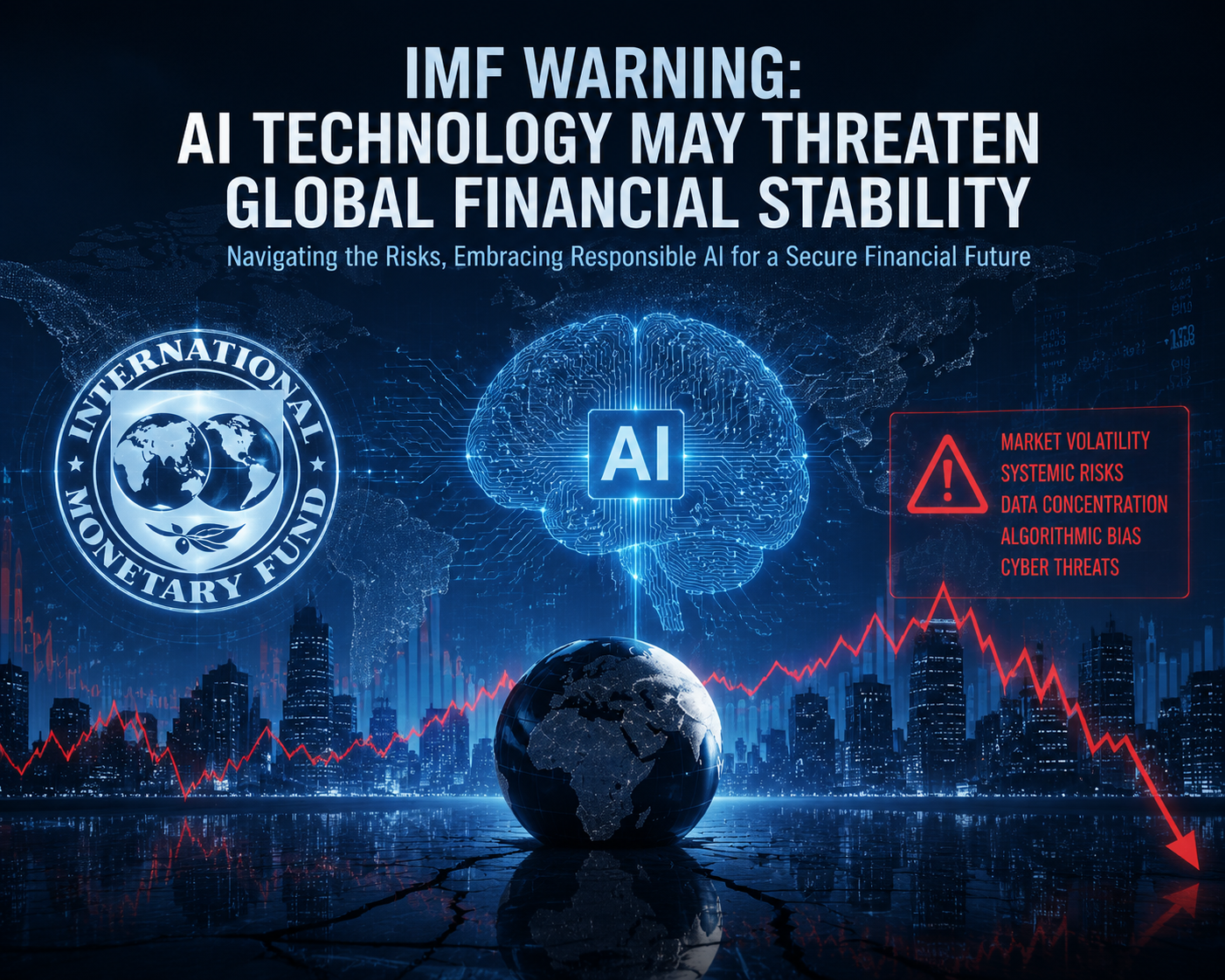
As artificial intelligence (AI) technologies rapidly evolve, they are reshaping industries from finance and healthcare to manufacturing and research. At the same time, regulators and international organizations are raising alarms about the systemic risks posed by AI. The International Monetary Fund (IMF) recently published an analysis report highlighting that the proliferation of advanced AI models could threaten the stability of the global financial system.
This is not just a technology news story—it is a global dialogue on how AI defines the future architecture of financial security. This article explores the underlying logic of the IMF warning, global regulatory trends, risk mechanisms in the financial system, and how investors and institutions can effectively respond.
Meanwhile, multi-agent AI investment research platforms such as AlphaVue.ai are playing an increasingly important role by helping investors understand complex AI risks, capture market signals, and build robust investment strategies.
1. How AI is Changing Financial Risk Dynamics
1.1 AI Adoption in Finance
Over the past decade, AI has profoundly transformed the structure and operation of financial markets. Key applications include:
Algorithmic Trading: AI generates real-time trading decisions based on massive datasets;
Risk Forecasting & Credit Assessment: models predict default probability and market risks using unstructured data;
Fraud Detection & Defense Systems: deep learning identifies anomalous transaction patterns;
Portfolio Optimization: reinforcement learning and intelligent optimization enhance asset allocation efficiency.
These applications improve efficiency, reduce costs, and enhance user experience, but also increase system complexity, opacity, and the attack surface.
1.2 Emerging Risk Vectors from AI
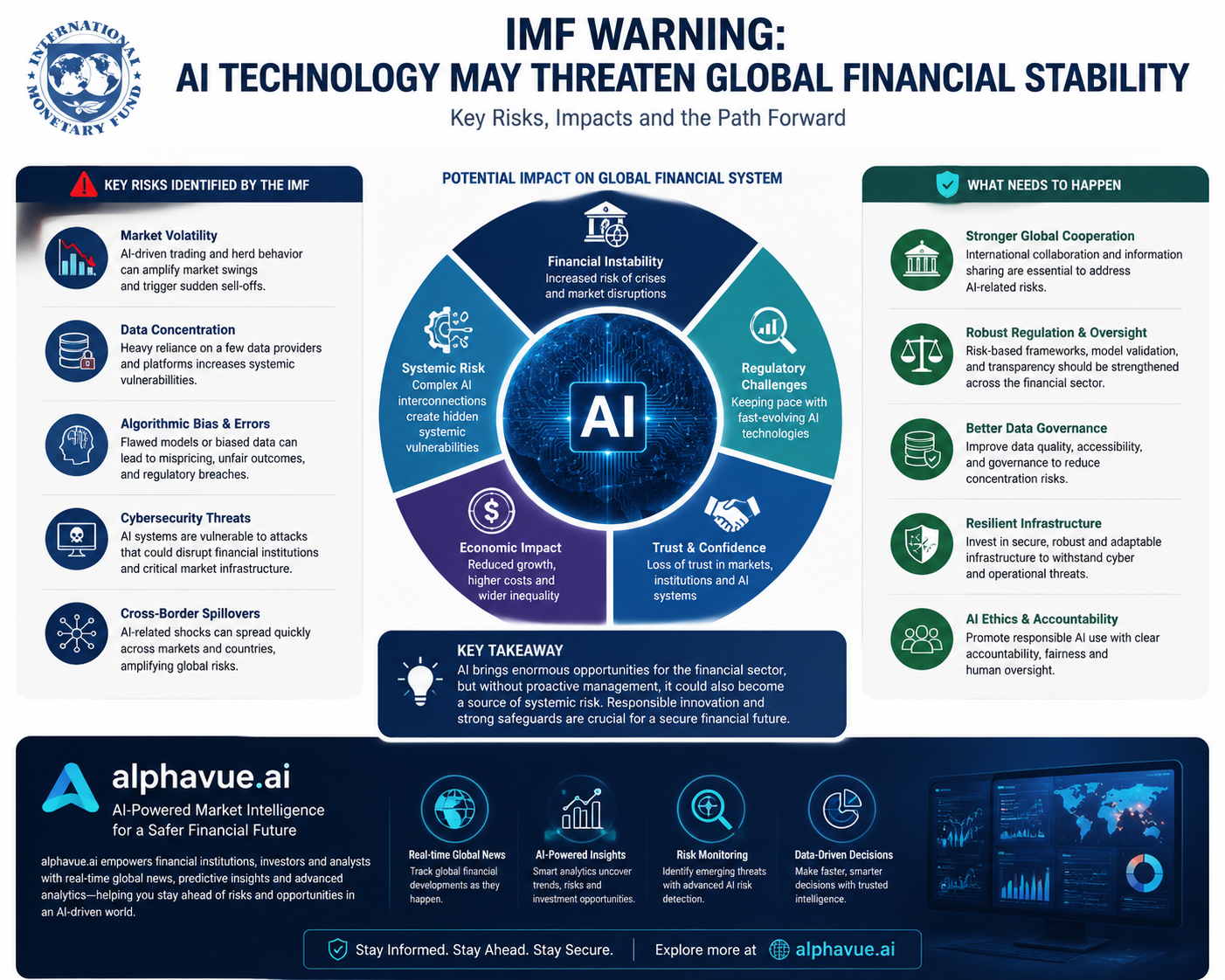
The IMF highlights that AI-driven threats possess advantages such as automated vulnerability discovery and cross-system propagation risks:
Automated Vulnerability Discovery
AI models can:
Automatically interpret system logic using natural language analysis;
Identify weaknesses across multiple data sources;
Generate targeted attack scripts.
Systemic Risk Amplification
Modern financial systems are highly interconnected. AI-driven anomalies can trigger cascading effects across clearing systems, securities markets, and derivative chains, potentially leading to system-wide financial disruptions.
Vulnerabilities in Under-Resourced Markets
Emerging economies may lack robust cybersecurity systems, skilled personnel, and cross-institution coordination, making them particularly vulnerable to AI-induced risks.
2. Key Insights from the IMF Warning
2.1 AI Lowers Attack Barriers and Costs
AI can discover system vulnerabilities and attack paths more efficiently than traditional methods;
Attackers can simulate or surpass white-hat testers’ capabilities;
Automated deployment allows attacks to scale rapidly.
2.2 Interconnected Systems Heighten Risk Propagation
The interconnection of global financial systems means AI-driven events can propagate rapidly, amplifying market volatility and systemic threats.
2.3 Under-Resourced Regions Face Greater Threats
The IMF warns that developing and emerging markets may lack sufficient resources to build strong defenses, increasing their exposure to AI-driven financial risks.
3. Global Regulatory and Policy Responses
3.1 National AI Risk Frameworks
Regulators worldwide are establishing frameworks to assess and audit AI risks, including:
EU AI Act mandates strict evaluation for high-risk AI systems;
US financial regulators require independent auditing of AI-driven trading systems;
Central banks in Japan and South Korea are implementing AI risk monitoring frameworks.
3.2 International Cooperation Mechanisms
IMF and international organizations call for:
Cross-border threat monitoring and data sharing;
Global AI risk metrics;
International AI risk management committees.
3.3 Dynamic Supervision and Real-Time Alerts
Regulators are moving from post-incident review to real-time monitoring and intervention, leveraging AI to analyze trading patterns globally and flag anomalies immediately.
4. Financial Institutions’ Perspective and Strategic Adjustments
4.1 AI as Both Threat and Tool
Institutions recognize AI’s dual role: it enhances risk detection but can also be exploited for large-scale attacks.
4.2 Risk Modeling and Contingency Enhancements
Institutions update risk models, perform AI-driven stress tests, and strengthen cross-department coordination with human oversight.
4.3 Independent Auditing and Explainability
Third-party audits and explainable AI models ensure transparency, and decision paths are logged for anomaly tracing.
5. How Investors Can Navigate the AI Risk Era
5.1 Incorporate AI Risks into Risk Assessment
Investors should assess AI dependence in companies, regulatory pressure in industries, and potential market volatility from AI events.
5.2 Diversification and Dynamic Adjustments
Investment portfolios should be diversified, with hedging strategies to mitigate AI-driven systemic risk.
5.3 Monitor Regulatory and Policy Developments
Policy changes can influence market sentiment and asset valuations. Investors need to track global AI regulations and policies from key financial centers.
6. AlphaVue.ai — A Smart Investment Tool for the AI Risk Era
6.1 Multi-Agent AI Analysis
AlphaVue.ai employs 20+ intelligent agents to analyze global economic indicators, news sentiment, market data, and AI-driven events, providing investors with comprehensive insights.
6.2 Real-Time Global Sentiment and News Capture
The platform continuously monitors thousands of news sources, regulatory announcements, and social signals, evaluating their sentiment and potential impact on markets.
6.3 Risk Alerts and Dynamic Model Adjustments
Built-in risk engines predict potential systemic events and dynamically adjust portfolio recommendations to suit various risk preferences.
6.4 Visual Analysis and Actionable Insights
AlphaVue.ai provides visualized trend charts, event impact assessments, and portfolio exposure analysis, bridging analysis to actionable decisions.
Conclusion: Building Resilient Investment Strategies in the AI Era
The IMF warning serves as a critical alert for global financial markets. AI is both an opportunity and a potential systemic threat. Managing these risks requires cross-regulatory, cross-institutional, and cross-system collaboration. Platforms like AlphaVue.ai provide real-time analysis, risk assessment, and decision support, helping investors stay informed and act confidently in a rapidly evolving AI-driven market landscape.