
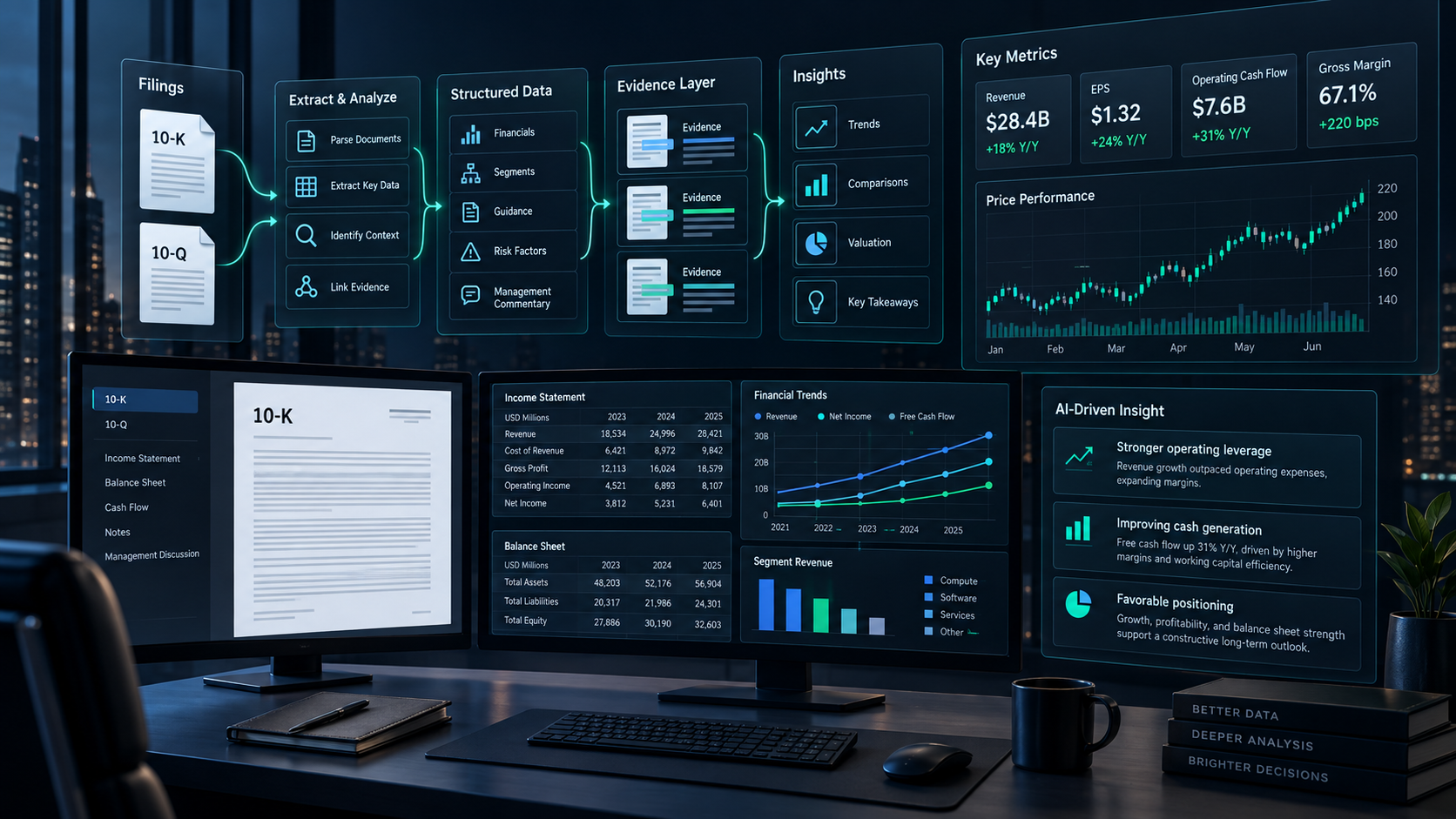
OpenAI released GPT-6 Astra on September 3, 2026, rolling out access to paid ChatGPT tiers and enterprise partners. The headline announcement centers on generational leaps in autonomous computer use, complex software engineering, and multi-step scientific reasoning. For investors, however, the critical question is not whether Astra can write complex code or navigate software interfaces on a desktop. The essential question is whether these advancements in autonomous tool execution, agentic persistence, and synthesis make stock research more reliable at scale.
The practical answer is yes, but with fundamental qualifications that every serious investor must understand.
GPT-6 Astra demonstrates an unprecedented ability to interact directly with digital environments, parse unstructured documents, write and execute analytical code, and sustain long-horizon research sessions. Those traits directly map to high-friction equity research tasks: retrieving 10-K and 10-Q filings from regulatory portals, extracting tables from non-standard investor presentations, recalculating unit economics across historical quarters, and identifying divergences between management commentary and reported figures.
Yet an advance in foundation model capability does not automatically establish an investment process. Raw models can still hallucinate non-existent guidance figures, blend GAAP and non-GAAP metrics, mistake marketing narrative for economic substance, and suffer from total thesis amnesia once a chat session closes. OpenAI's own technical disclosures explicitly note that even advanced reasoning models exhibit failure modes under ambiguity and require robust external grounding.
The meaningful conclusion for investors is clear: GPT-6 Astra dramatically elevates the ceiling of what AI can extract and synthesize, while making disciplined evidence validation, multi-agent adversarial review, and persistent thesis tracking more essential than ever.
What OpenAI Actually Delivered
GPT-6 Astra represents the successor to OpenAI's GPT-5.6 family released earlier in 2026. OpenAI frames Astra as its most capable, aligned, and versatile agentic intelligence to date, engineered specifically to handle end-to-end tasks rather than merely responding to conversational prompts.
For financial analysts, the core specifications and architectural updates carry concrete implications:
| Dimension | GPT-6 Astra Specification | Practical Impact on Investment Research |
|---|---|---|
| Core Architecture | Native agentic reasoning with autonomous computer use | Enables the model to navigate investor portals, browse interactive web tools, and operate spreadsheets directly |
| Modality & Ingestion | Omnimodal processing across text, high-resolution document imagery, financial tables, and audio transcripts | Unifies SEC filings, earnings call audio, conference slides, and visual exhibits into a single analytical pass |
| Context & Memory | Expanded high-fidelity context window with active state tracking | Allows multi-year comparative filing sweeps without immediate loss of earlier quarterly baselines |
| Execution Discipline | Integrated code execution, API tool orchestration, and self-correcting multi-step planning | Executes reproducible ratio calculations and DCF models via code rather than approximating math in prose |
| Safety & Grounding | Strengthened alignment thresholds and cybersecurity inspection gates | Reduces vulnerability to prompt injection and ungrounded speculative leaps |
| Availability | Rolling deployment across ChatGPT Plus, Pro, Business, Enterprise, and the OpenAI developer API | Immediately accessible for active experimentation in desktop and programmatic research workflows |
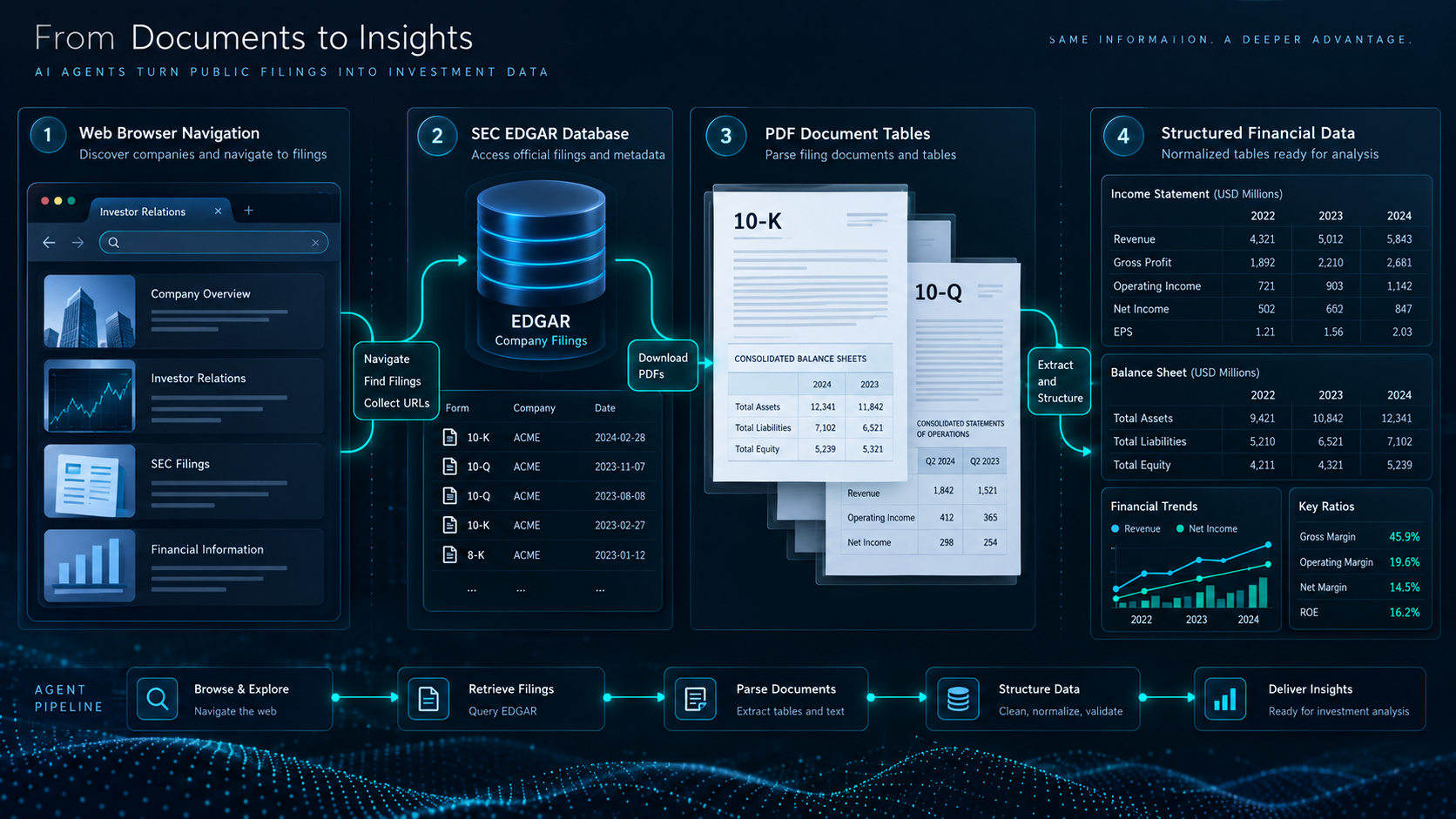
The addition of native computer use is the headline capability. In prior model generations, feeding an annual report or dynamic investor relations dashboard to an AI required either manual downloading, clumsy text conversion, or custom API wrappers. Astra can, in principle, navigate to an investor relations portal, locate the latest quarterly filing, open the exhibit files, inspect embedded graphics, and extract relevant tables into structured records.
However, operational ability is not financial discernment. Being able to download a PDF does not mean the model understands whether an inventory buildup reflects healthy anticipation of demand or dangerous channel stuffing. That judgment requires domain-specific framing and rigorous verification.
The Most Significant Improvements for Investors
Autonomous computer use and document navigation
Financial disclosures are rarely packaged in clean, accessible text files. A typical earnings announcement involves a press release, a GAAP reconciliation table, an executive slide deck with custom charts, and a sixty-minute audio webcast accompanied by an unedited transcript.
Prior models often stumbled when encountering dynamic JavaScript interfaces, scanned PDF exhibits, or complex multi-column balance sheets. GPT-6 Astra's computer-use architecture allows it to interact with web elements, follow download links, and process multi-page financial statements in their native visual layouts.
This reduces the data-preparation bottleneck that has historically consumed eighty percent of an analyst's time. Instead of spending hours converting tables and aligning dates, an investor can direct the model to retrieve the exact segment reporting definitions from the past three years of filings.
Multi-step agentic planning and error recovery
One of the greatest weaknesses of earlier conversational AI was its fragility during multi-step research. If an intermediate data point was missing or an API call timed out, the model would either halt or silently invent a plausible number to complete its answer.
Astra incorporates explicit self-correction loops. When tasked with comparing the customer acquisition cost and net revenue retention of three enterprise software companies, the model can:
- Check whether each company reports the metric under the same definition.
- Flag when one company reports net retention on an annual basis while another reports on a quarterly cohort basis.
- Identify missing disclosures and search alternative sources, such as investor day transcripts, before concluding data is unavailable.
- Retain the trail of evidence for each intermediate calculation.
This procedural discipline transforms AI from a casual brainstorming companion into a capable junior research assistant, provided its steps remain auditable by a human supervisor.
Code-level deterministic calculation
Language models should never be allowed to perform mental arithmetic on financial figures. When an LLM calculates a compound annual growth rate or an enterprise-value-to-EBITDA multiple conversationally, it predicts the next likely token rather than solving a mathematical equation.
GPT-6 Astra tightly integrates sandboxed Python execution into its core reasoning flow. When asked to evaluate the impact of a fifty-basis-point margin compression on future free cash flow, Astra generates and runs the underlying formula, verifying the algebraic consistency of the output before presenting the conclusion.
This separation of powers is non-negotiable for serious work: the language model formulates the economic hypothesis and interprets the qualitative drivers, while deterministic code handles the calculations.
What GPT-6 Astra Still Cannot Do
Understanding where a frontier model fails is far more profitable than celebrating its capabilities. Several structural limitations remain firmly in place.
The persistent threat of financial hallucination
Apply this research method to your stock
Enter one ticker and get a research summary you can keep exploring.
OpenAI has made substantial progress in reducing outright hallucinations, but the risk has not been eliminated. In financial contexts, hallucinations rarely look like bizarre fabrications. Instead, they take subtle, insidious forms:
- Attributing a quotation from a previous fiscal year to the current quarter.
- Merging pro-forma adjusted earnings with GAAP operating income without identifying the adjustment.
- Hallucinating forward guidance figures when the company only provided directional commentary.
- Citing a real SEC filing section number that actually discusses an unrelated topic.
Because Astra writes with high fluency and professional polish, unverified errors are harder to detect by casual inspection. An analyst who accepts a model-generated DCF model without auditing the underlying discount rate or terminal growth assumptions is engaging in speculation, not research.
The absence of persistent thesis memory
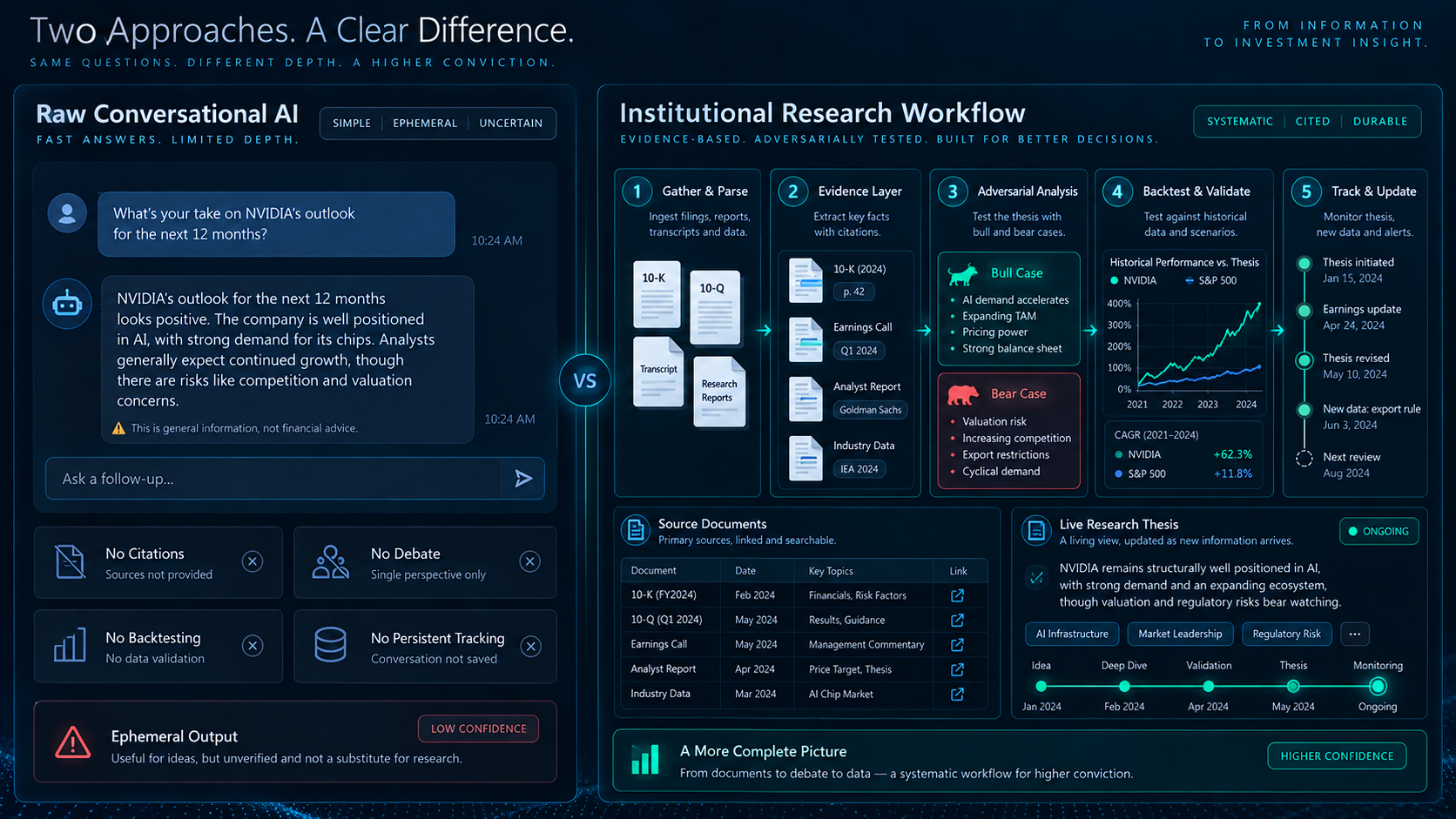
ChatGPT sessions are ephemeral by design. You can conduct a four-hour research deep-dive on an industrial manufacturer, document every growth driver, and identify five key risks. However, when the company reports earnings three months later, the chat context is disconnected from live reality.
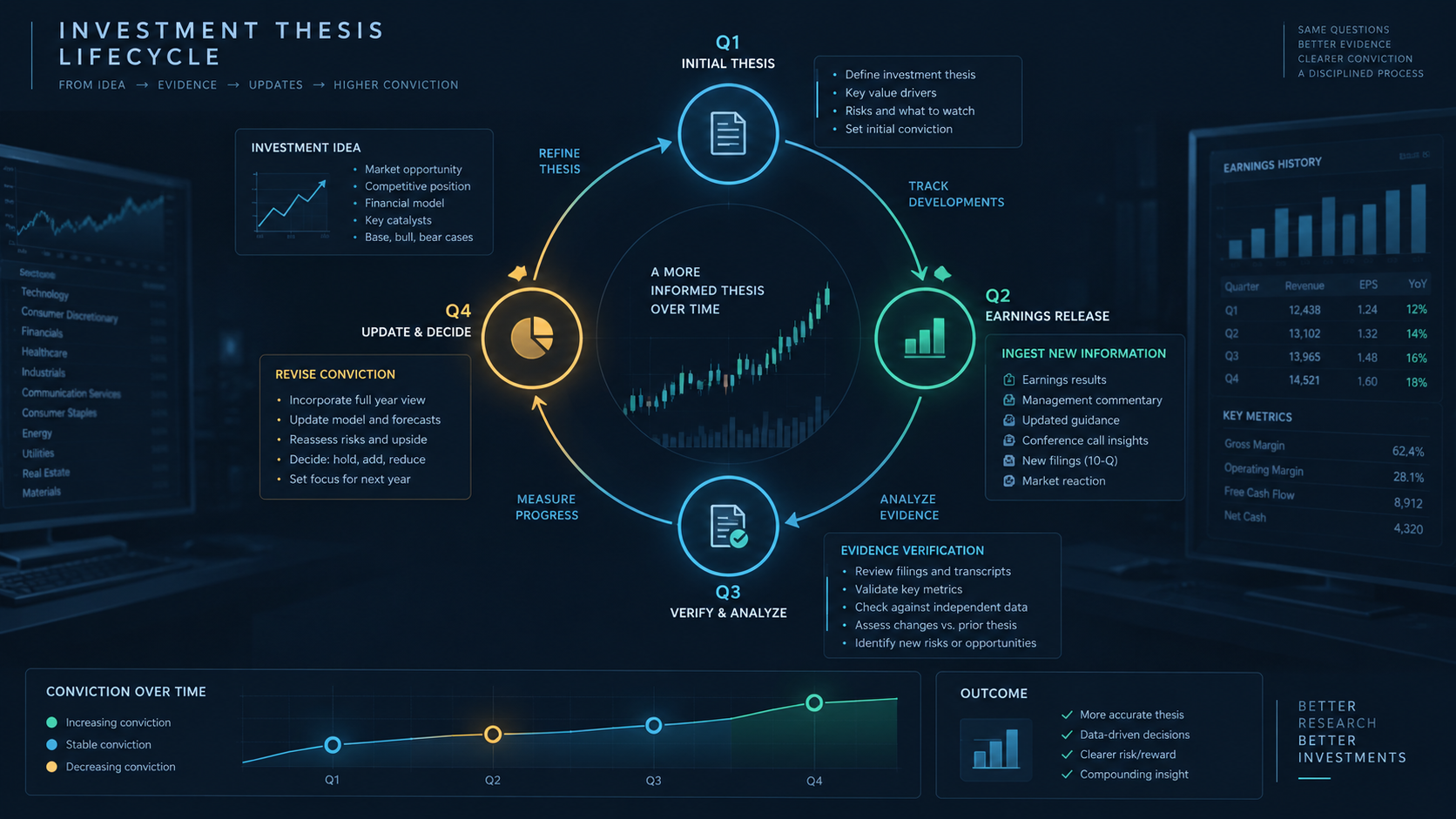
A general chatbot has no native concept of a persistent investment thesis. It does not maintain a structured change log answering the essential questions:
- What was my initial bull case six months ago?
- Which observable metric was supposed to validate that case?
- Did management's revised guidance breach my downside threshold?
- How has my conviction shifted across the last four quarters?
Without persistent thesis tracking, every interaction with an AI model resets to zero, forcing the investor to reconstruct their mental model from scratch.
Benchmarks do not measure alpha or risk-adjusted returns
OpenAI's published benchmarks evaluate coding proficiency, standardized math competitions, and broad knowledge synthesis. None of these benchmarks measure investment performance.
A model can score in the ninety-ninth percentile on a graduate-level reasoning test and still fail completely at capital allocation. Markets are dynamic, reflexive, and forward-looking. Publicly available facts are rapidly digested and priced by global participants. An AI that merely summarizes historical filings faster is doing what thousands of algorithmic systems already do.
Generating real investment insight requires identifying where consensus expectations diverge from economic reality, stress-testing vulnerabilities, and monitoring whether the underlying business fundamentals are intact. General benchmarks tell you nothing about a model's ability to execute that discipline.
How to Build a Safe Workflow with GPT-6 Astra
Investors looking to integrate GPT-6 Astra into their daily workflow should adopt a structured, five-stage protocol that neutralizes model weaknesses while exploiting its reasoning strengths.
Step 1: Define falsifiable questions before gathering data
Never prompt an AI with broad questions like What do you think of this stock? Such queries invite generic, crowd-sourced consensus summaries that add zero value.
Instead, frame inquiries around specific, falsifiable assertions:
- What percentage of the company's operating profit growth over the past three years came from organic volume versus pricing and acquisitions?
- How has the definition of remaining performance obligations shifted in the notes to the financial statements over the last eight quarters?
- If gross margins compress by two hundred basis points due to input cost inflation, what is the resulting impact on debt covenant compliance?
Step 2: Enforce a strict evidence hierarchy
Instruct the model to prioritize primary disclosures over secondary commentary. SEC filings, audited annual reports, regulatory rulings, and direct management transcripts represent primary evidence. Broker reports, financial news articles, and press commentary represent secondary interpretations. Unverified social discussions represent sentiment noise.
Demand that every extracted data point include:
- The exact source document name and filing date.
- The precise table, section, or page reference.
- The reporting period and unit of measurement.
- Explicit notation of whether the figure is GAAP or non-GAAP.
Step 3: Run adversarial bull and bear stress tests
One of the most effective uses of advanced reasoning models is simulating opposing viewpoints. Because human investors naturally fall victim to confirmation bias, they tend to collect data that reinforces their existing positions.
Deploy the model as a dedicated adversary. Present your investment thesis and instruct the system:
- Act as a skeptical short seller examining this company.
- Identify the three most fragile accounting assumptions in the latest report.
- Highlight customer concentration risks, supplier dependencies, and off-balance-sheet commitments.
- Detail the exact macroeconomic scenario that would break this company's operating leverage.
Step 4: Isolate qualitative interpretation from deterministic math
Require the model to write explicit Python code for all valuation models, growth calculations, and sensitivity analyses. Inspect the code to ensure the formulas reflect sound financial theory:
- Verify that enterprise value reconciliations properly include minority interest, preferred equity, and operating lease liabilities.
- Check that working capital adjustments in cash flow projections do not double-count accrued liabilities.
- Confirm that share dilution from stock-based compensation is modeled dynamically rather than assumed static.
Step 5: Log the thesis and establish forward observation triggers
Before closing your research, distill your findings into a formal baseline:
- Document your core operating assumptions and expected financial trajectory.
- Establish specific tripwires: what quarterly metric, executive departure, or regulatory filing would cause you to abandon the position?
- Archive the analysis with timestamps so that subsequent developments can be compared against what was known at the time of decision.
From Foundation Model to Financial Workflow Platform
This distinction highlights why general AI assistants and purpose-built investment platforms serve fundamentally different roles.
A general model like GPT-6 Astra is a reasoning engine. It provides the computational intelligence, language fluency, and computer-use tools to process information. However, it is not an investment system. It lacks the curated financial databases, live regulatory feeds, multi-agent governance, and portfolio context needed to manage real capital.
This is where specialized platforms like AlphaVue complete the equation.
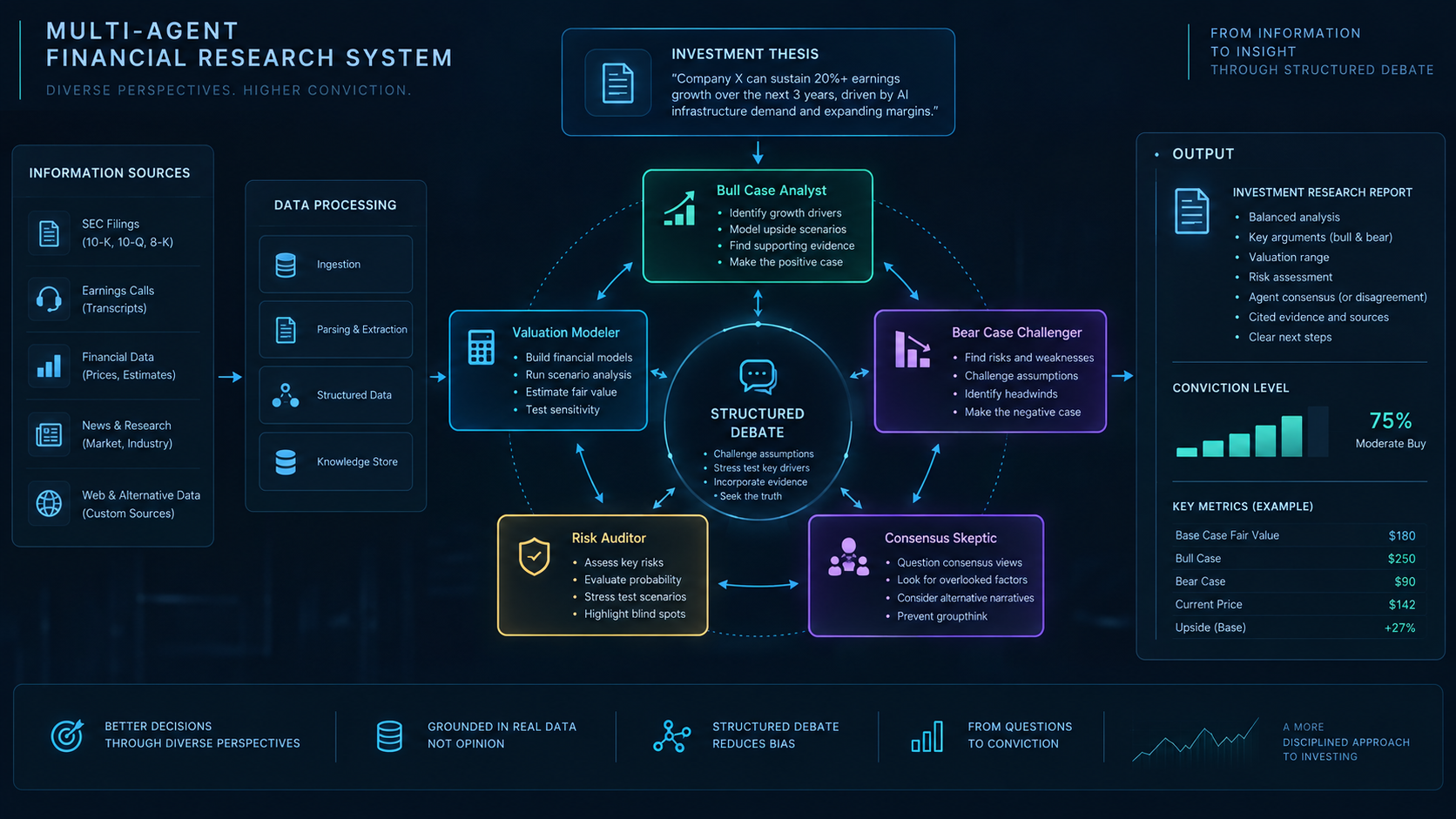
AlphaVue is built from the ground up around the complete lifecycle of an investment thesis. Rather than relying on a single conversational prompt, AlphaVue coordinates twenty specialized analytical agents inside its Agent Command Center. These agents conduct structured bull, bear, valuation, risk, and consensus-challenging debates, ensuring that no single narrative dominates the analysis.
Furthermore, AlphaVue grounds every claim in an explicit Evidence Layer, connecting assertions directly to verified primary sources and tracking data-health states in real time. Through its Strategy Lab, investors can backtest and forward-test investment rules against historical market cycles, moving beyond qualitative intuition into empirical validation. Most importantly, AlphaVue's Thesis Change Log maintains a persistent, audit-ready record of how your investment case evolves over time, alerting you when fresh evidence contradicts your original premise.
For investors exploring structured AI workflows, resources such as AlphaVue's complete guide to AI stock research and its breakdown of multi-agent research architecture illustrate how multi-agent debate and verifiable evidence chains transform raw AI capabilities into a dependable research process.
To be completely transparent, this analysis does not claim that AlphaVue utilizes GPT-6 Astra under the hood. As foundation models continue to evolve rapidly across Google, OpenAI, and open-source labs, the durable advantage belongs to platforms that maintain model-agnostic workflow infrastructure: source-grounded retrieval, adversarial debate, persistent thesis memory, and portfolio-aware risk controls.
What Investors Should Watch Next
As GPT-6 Astra enters widespread deployment, market participants should observe several critical indicators to assess its true long-term utility:
- Real-world extraction accuracy on messy tables: Watch whether computer-use agents can reliably extract complex footnotes and multi-layer debt schedules without dropping rows or misaligning columns.
- Hallucination frequency in non-GAAP reconciliations: Measure how consistently models flag adjustments between reported GAAP net income and company-defined adjusted EBITDA.
- Latency and economics of agentic loops: Assess whether multi-step autonomous browsing workflows can be run affordably across a multi-hundred-stock universe.
- Integration with specialized domain platforms: Observe how effectively frontier models are harnessed within auditable, evidence-grounded research workspaces rather than isolated consumer chat interfaces.
The Takeaway
GPT-6 Astra represents an impressive technological step forward. Its autonomous computer use, strengthened agentic planning, and sandboxed code execution remove significant mechanical friction from financial research.
However, superior technology does not eliminate the fundamental realities of investing. Information alone does not generate alpha; disciplined interpretation, evidence verification, risk management, and emotional control do.
Use GPT-6 Astra to accelerate your reading, structure your notes, and stress-test your logic. But anchor your actual investment decisions in an auditable workflow that respects primary evidence, welcomes debate, and tracks your thesis over time.
Start disciplined, multi-agent investment research with AlphaVue